Planning your garden around sun and shade
The bottom of this article contains detailed garden plans, but those plans will be more helpful once you have more context…
Part of gardening is understanding how to plan your garden beds, patio pots, or edible landscape, while taking into account:
- What plants grow well together (you can find lists of these “companion” plants in any of our GrowGuides under “Helpful Guild Plants”).
- How much direct sunlight a particular plant needs (found under “sun, soil, and water” in our GrowGuides”) and the sun’s position relative to your beds.
Definitions: full sun, part shade, and full shade
Most common garden plants grow well in full sun, but not all. Sunlight requirements for a particular plant will be listed as follows:
- full sun (6-8+ hours direct sun),
- part shade (4-6 hours of direct sun),
- full shade (less than 4 hours of direct sun).
Now let’s dive a little deeper into some helpful information and tools you can use to plan your garden beds, patio pots, or edible landscape…
Sunlight hours and garden planning
The first thing you need to consider when designing your garden is the position of the sun and the number of sunlight hours you get in your garden beds.
There are multiple apps that can help you. SunSurveyor (iOS & android – $9.99) is the one we use, but Sun Seeker (iOS & android – $9.99) is a solid option as well. Both have a 3D augmented reality feature that allows you to visualize the sun’s position at different dates and times around a certain point (like a garden bed). This has been immensely helpful for us when planning new garden beds or rethinking and redesigning old ones.
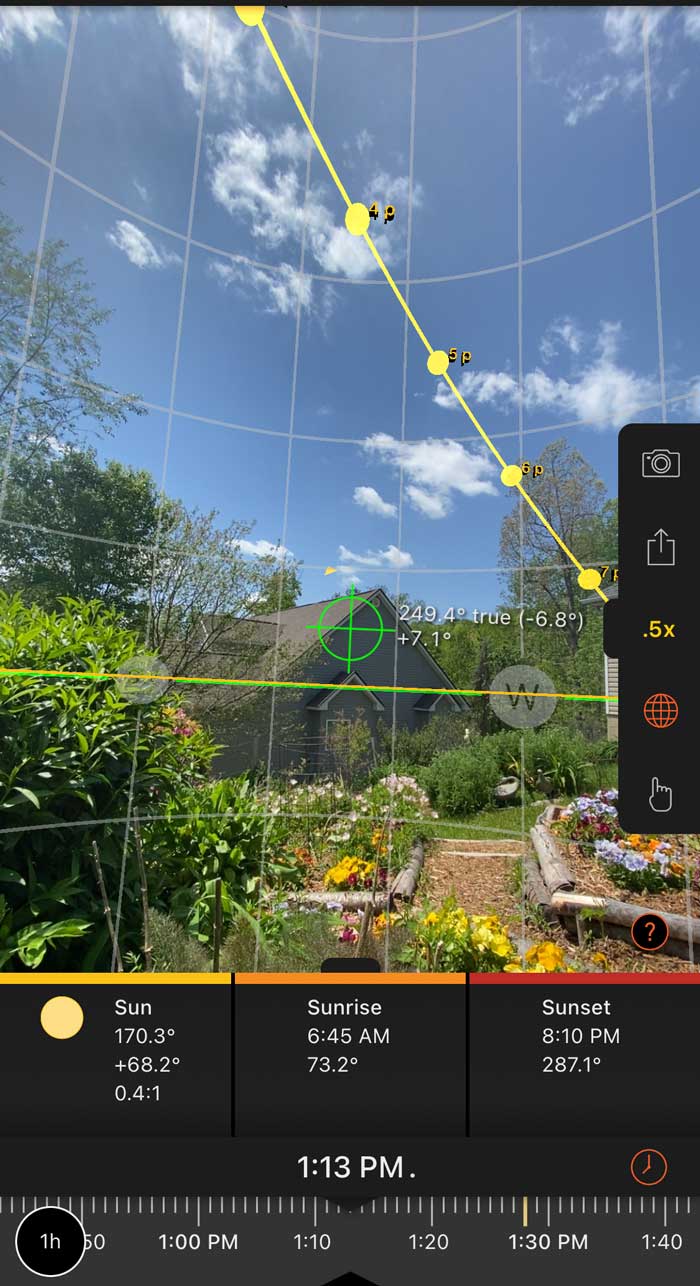
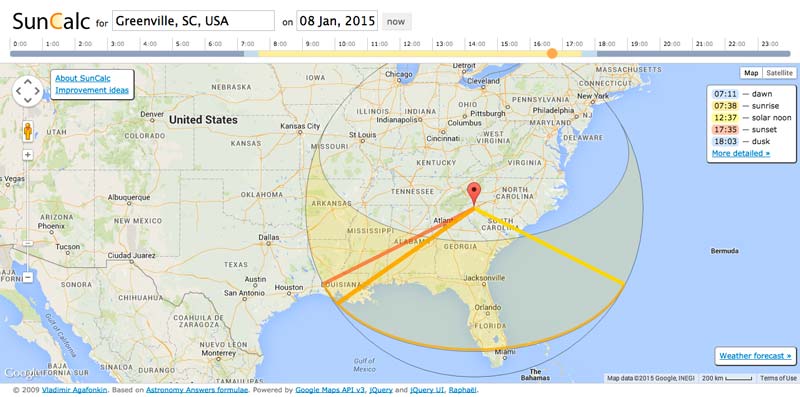
Another wonderful tool that runs from your web browser is SunCalc. It’s not as precisely accurate as standing in the middle of your garden and looking at the sun’s exact position around that bed in 3D augmented reality, but it is still very useful in planning.
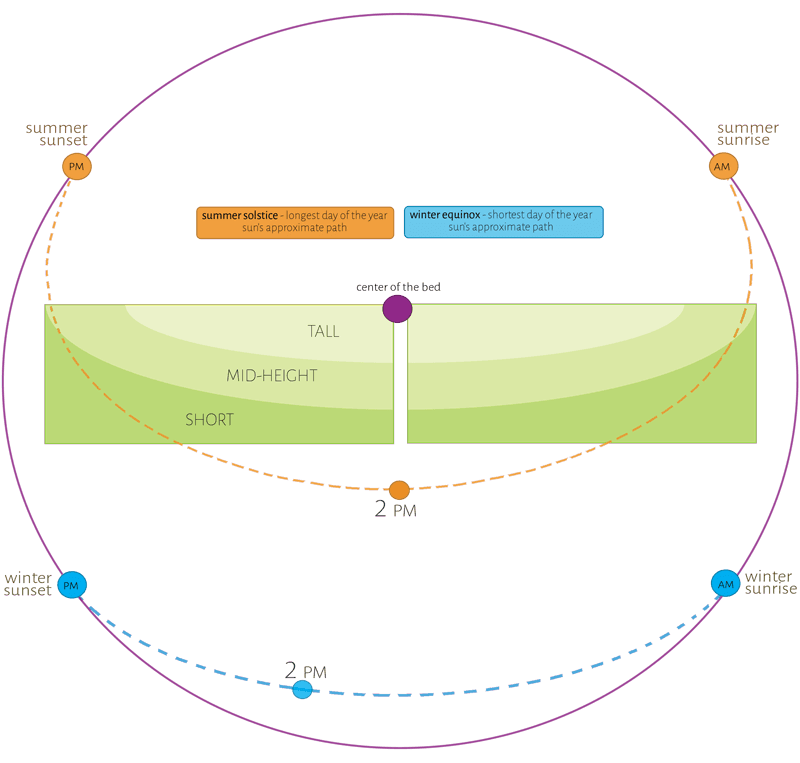
Below you can see a diagram showing the sun’s path over two raised beds in our Agricultural Zone 7B garden. This illustrates how the sun’s path changes throughout the year, influencing day length and how much sun garden beds get exposed to. This is modeled after data from our Sun Surveyor app.
- summer solstice = longest day of the year: represented by orange dashed line
- winter equinox = shortest day of the year: represented by blue dashed line
Notice that the taller plants are in the back and will block little sun to the shorter plants in the middle and the front (except maybe early in the morning in the far left bed). Keeping that in mind, we’ll probably put plants in that far left spot that thrive in the heat of strong afternoon sun.
Also, the medium and short height plants on the far right might be a bit shaded from the strong late afternoon sun, so we’ll plant things that prefer a bit more filtered light later in the afternoon.
Seasonal sun changes, buildings, trees…
The most common garden bed size in the United States is 4’x10′ bed, which is what we’ve used in our models on this page. However, you can easily apply all of this information to your garden, no matter how small or how big your growing space is.
Just keep in mind where the sun rises and sets in your yard throughout the seasons, and if there are any buildings, trees/tall shrubs or fences that can cause shade; it makes a big difference and you may need to re-orient your garden plans so that the tall plants aren’t completely shading the shorter ones for large parts of the day.
It can also be important to note that areas of full shade due to deciduous trees in the summer may be completely awash with sun in the winter once the leaves have dropped in the fall & winter months, opening up new seasonal gardening possibilities!
How to use shade in your edible garden
A quick note about shade: shade isn’t always a bad thing! For one, there are countless edible plants that grow well in part to full shade.
Also, in our area (zone 7B), we’ve found that even “full sun” plants (like summer & winter squash) really appreciate a reprieve from the hottest parts of a late-July day, so we try to plant them where they will get part shade for at least some of the most scorching hours (usually 1:00-3:00 in the afternoon). Shade can be a really good thing in a garden if you just watch your plants to see who struggles in a whole day of full sun, make notes and revise your plan then plant accordingly next year.
So much of gardening is observation and iteration! Don’t be afraid to try new things and make mistakes. That’s one of the ways you’ll become a better gardener (in addition to learning from other people)!
Below are some visual examples of garden beds with varying plant placement based on:
- the orientation of your beds relative to the sun;
- the height of the plants in the bed.
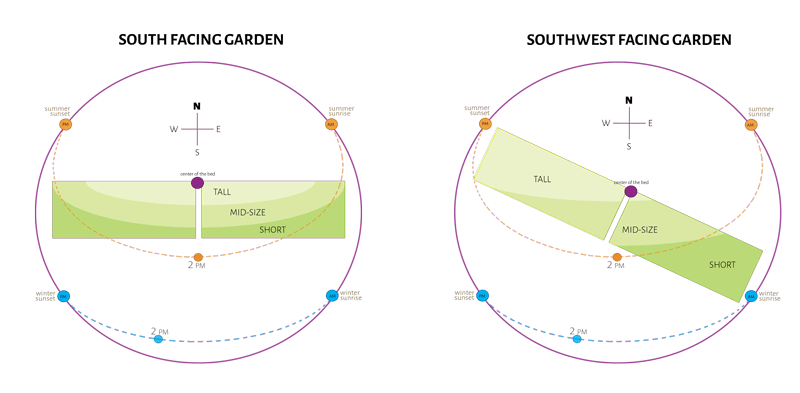
Here are a few examples of common bed configurations:
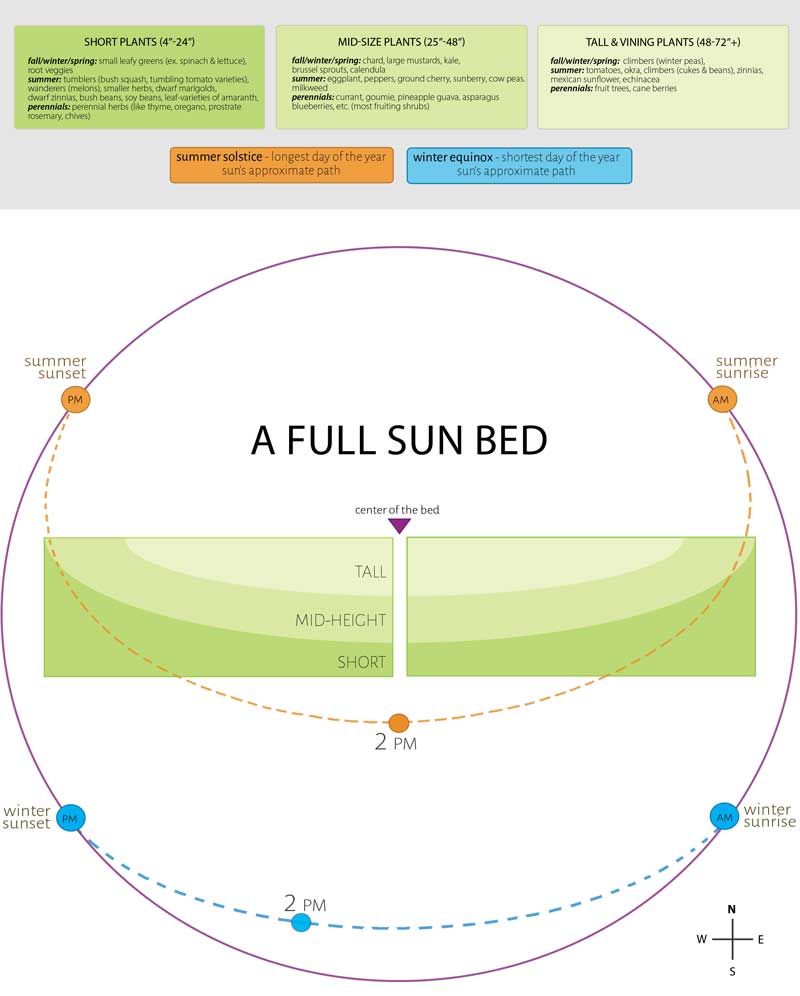
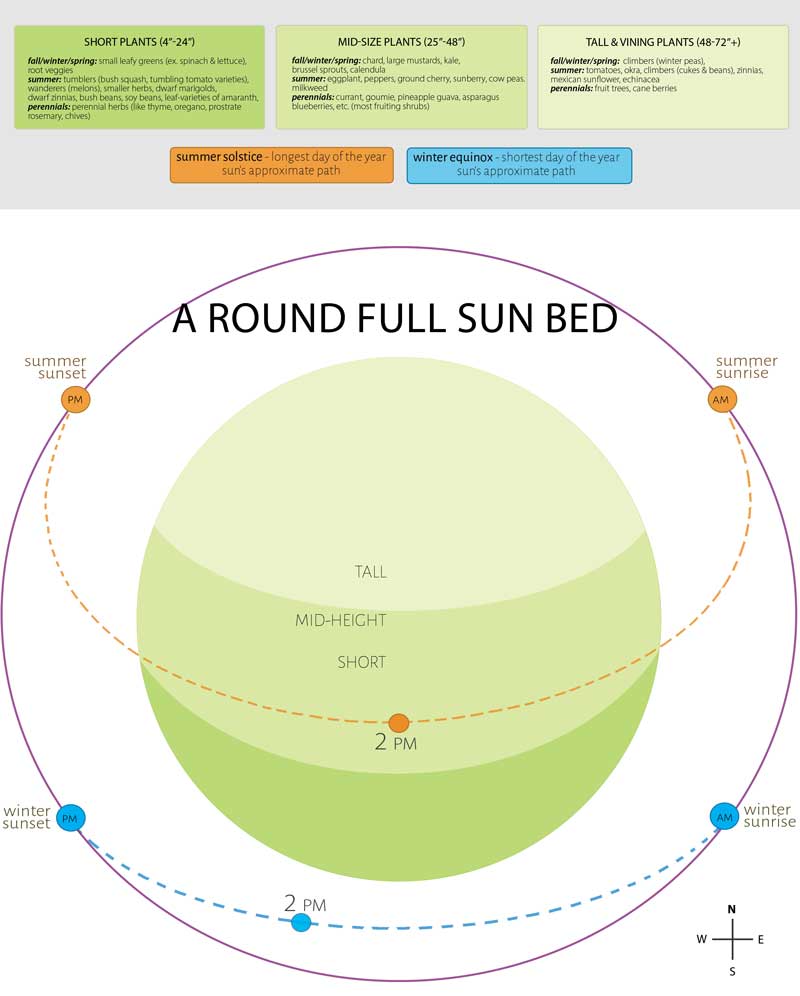
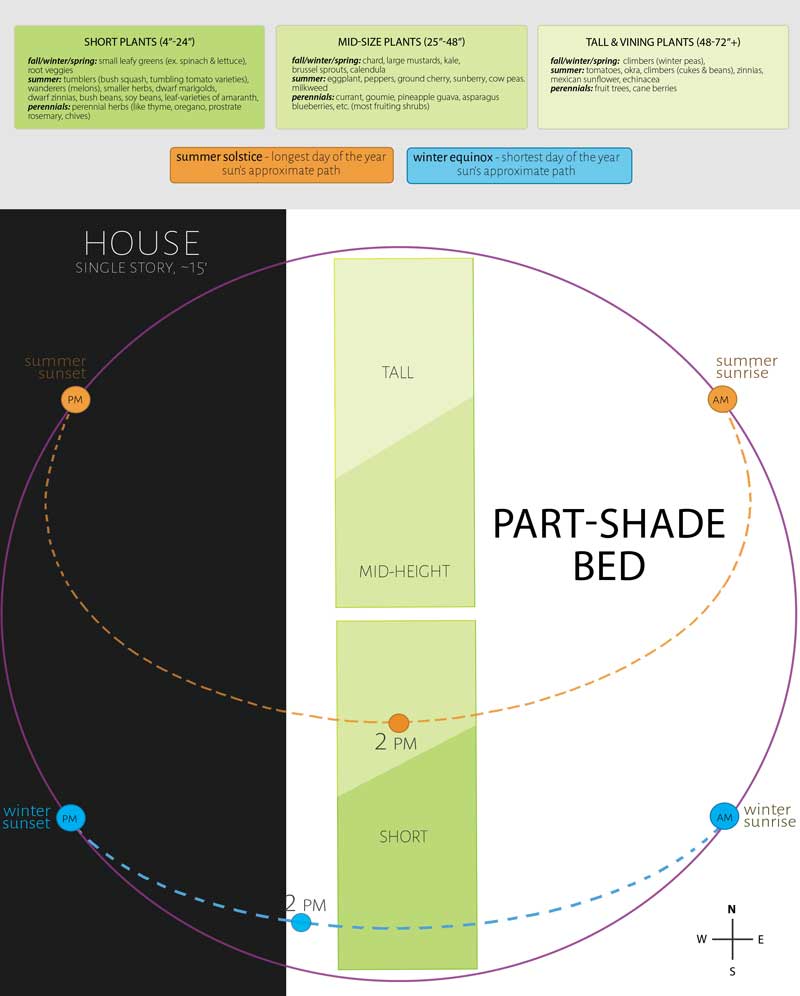
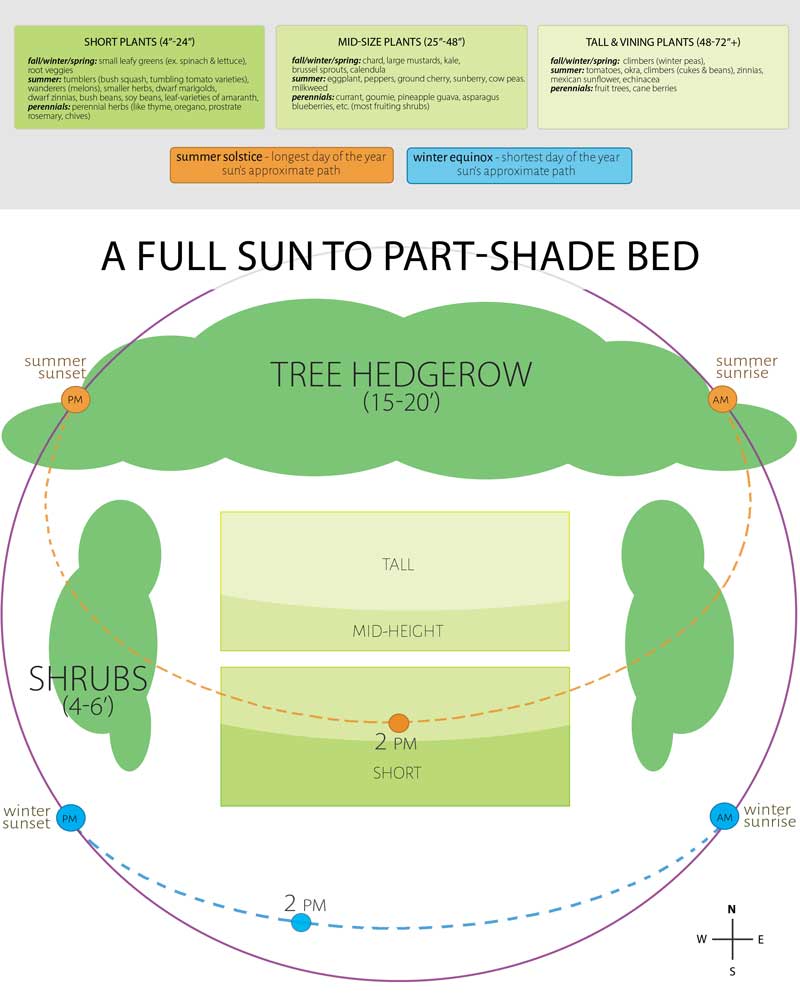
We hope this information helps you better plan your garden around the sun and shade your yard receives. Remember: don’t be afraid to make mistakes – you can always change things from season-to-season and year-to-year as you gain more experience.
Ready to get growing?
Check out our featured Garden Guides below! Or click here to see all of them.


Shop our store!
No more choice overload. With all products carefully curated by our expert team, the GrowJourney store has the basics you need to get growing, organically. Seed starting supplies, gardening books, tools, and more!
As an Amazon Associate, GrowJourney earns from qualifying purchases. Read more: terms of service.