
How to kill fungus gnats without pesticides
As an Amazon Associate, GrowJourney earns from qualifying purchases. Read more: terms of service.
Fungus gnats look similar to harmless fruit flies, but their root-eating larvae can harm or kill your indoor-grown garden seedlings and other plants. In this article, you’ll discover a safe, organic way to kill fungus gnats without pesticides!
What are fungus gnats?
Fungus gnats are a common agricultural pest that can severely damage or kill plants — especially young seedlings.
There are many different species of fungus gnats. In North American, problematic fungus gnat species are typically in the Bradysia genus.
What do fungus gnats look like?
Adult fungus gnats are small 1/8″ long, dark-colored/black gnats with clear wings. Their larvae live in the soil and look like translucent or slightly white-colored worms. The larvae are just large enough to be seen with the naked eye.

Are fungus gnats harmful?
Fungus gnats (adults are larvae) are not physically harmful to humans, pets, or animals. However, they can cause a great deal of emotional harm to people who love their plants – ha! As people who start thousands of garden seedlings each year, we know this from experience…
That’s because fungus gnat larvae can severely harm or kill garden seedlings if left unchecked.
How do fungus gnats hurt plants?
Fungus gnat larvae harm plants by eating their roots to the point that the plants’ stop growing due to inability to uptake nutrients and water. In the case of small seedlings, an infestation of fungus gnats can quickly cause enough root damage to kill the young plants.
Adult fungus gnats only live for about two weeks and do not directly harm seedlings or plants. During that two week period, a female fungus gnat can lay hundreds of eggs on the soil surface. Upon hatching, the larvae burrow into the soil where they feed on plant roots, fungi, and other organic matter.
How do you know if you have fungus gnats?
If you see small, dark-colored gnats with clear wings darting about on the surface of your seedlings’ soil and leaves, you almost certainly have fungus gnats — even if your plants currently appear healthy.

What’s the best way to control and kill fungus gnats?
If you know you’ve got fungus gnats and you want to eradicate them, we don’t recommend using pesticides — especially not synthetic pesticides. Instead, we highly recommend using an organic control method: specifically predatory nematodes.
We’ve successfully used predatory nematodes to eradicate fungus gnats on our seed starts countless times over the years. The key to success is early intervention: e.g. apply predatory nematodes as soon as you start seeing fungus gnats, not after your seedlings are on death’s doorstep.
What type of predatory nematodes kill fungus gnats?
There are lots of different species of predatory nematodes and each species has different prey preferences. Steinernema feltiae is the species of predatory nematode best suited to eradicate fungus gnats.

No, you don’t have to grow or collect millions of your own predatory nematodes. Thankfully, you can buy them.
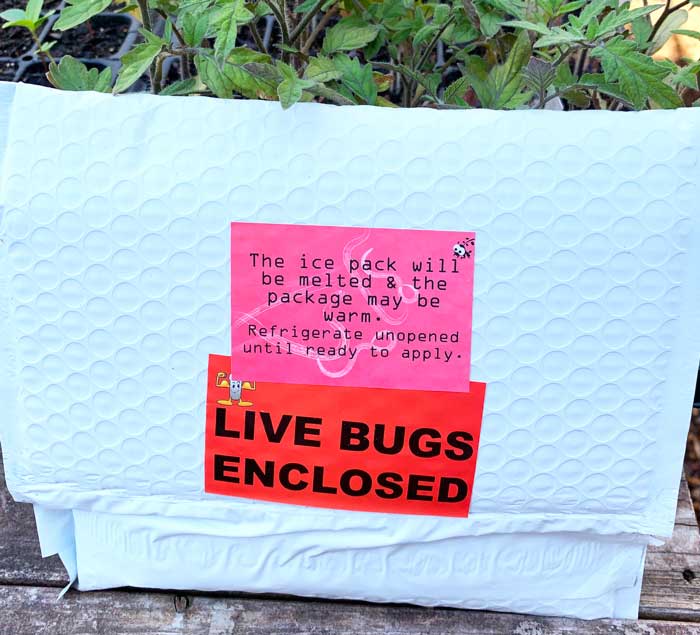
Our favorite predatory nematode product to kill fungus gnats is Nature’s Good Guys Live Beneficial Nematodes – Hb + Sc + Sf. This nematode blend contains the following species:
- Hb (Heterohabditis bacteriophora),
- Sc (Steinernema carpocapsae), and
- Sf (Steinernema feltiae)
In addition to eating fungus gnat larvae, this mix of predatory nematodes will control hundreds of other pest insects as well. For instance, we also use this product to kill Japanese beetle grubs.
How do you apply predatory nematodes for fungus gnat control?
As soon as you see fungus gnats on your seedlings, you’ll want to buy and apply predatory nematodes as soon as possible. Once your nematodes arrive, store them in the fridge until you’re ready to apply them, NOT your freezer.
Here’s how to apply predatory nematodes on your seedlings:
Step 1: Choose the right time of day (or light conditions).
You’ll want to take your seed trays outside to apply predatory nematodes to your seedlings.
The ideal time of day to apply your predatory nematodes is early in the morning or in the late afternoon/evening when temperatures are between 44-83°F (7-28°C). Alternately, you could put your seedlings in a full shade spot and apply the nematodes any time during the day.
Step 2: Choose an ideal sprayer or watering can.
We use a watering can that provides lightly dispersed streams of water via multiple holes on the spigot/rose. Alternately, you can use a hand mister or a sprayer depending on the number of seedlings you need to treat.

What you do NOT want to do is dump a lot of water all at once on your seedlings.
Step 3: Pre-dampen the soil.
If your seedlings’ soil isn’t already lightly dampened, mist it with the appropriate setting on your hose sprayer.
Step 4: Mix your nematodes into water
Next, prepare your nematodes for action by mixing them into water at the ratios recommending on the package.
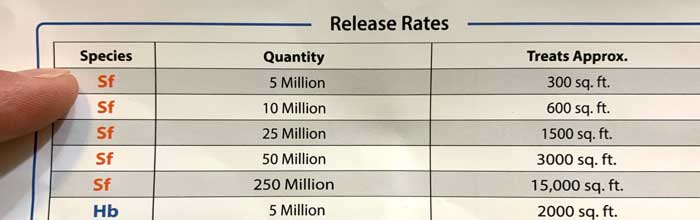
Unless you’re running a commercial seedling operation, one order of predatory nematodes should provide more than enough coverage for your seedlings.

Use any leftover nematodes in your garden beds or around perennial fruit and nut trees. Alternately, you can store them sealed in your fridge for up to 30 days if you think you want to save some for a future application.
Step 5: Apply nematodes
Spray or gently pour the nematode/water mix evenly over all your seedlings.

Step 6: Provide a final light misting of your seedlings.
Finally, give all your seedlings a light misting with the appropriate setting on your hose sprayer. This final spray helps work the nematodes into the soil and seedlings’ rhizosphere where the fungus gnat larvae are present.
Don’t put your seedlings back under grow lights or in full sun for at least 3 hours after you’ve applied your nematodes. Now it’s time to wait and let your hungry nematodes do their work!

Other frequently asked questions about predatory nematodes:
How long does it take for predatory nematodes to kill fungus gnats?
Predatory nematodes will start attacking fungus gnat larvae almost immediately after you apply them. Within 8-14 days you should start noticing a severe decline in the number of visible adult fungus gnats as they reach the end of their lifecycle and are not replaced by new fungus gnats since their larvae are being killed. By the end of two weeks, you shouldn’t have any more fungus gnats present on your seedlings.
Once the fungus gnats (and any other pests) are eliminated, your predatory nematodes will run out of food and die.
What about fungus gnat traps – can they eradicate fungus gnats?
Fungus gnat traps are not effective as a standalone method to eradicate an infestation of fungus gnats.
Fungus gnat traps work by capturing adult/flying fungus gnats on their sticky surface. This product is effective at helping you quickly determine if you have fungus gnats. However, once you see adult fungus gnats you’ve almost certainly got hundreds or thousands of eggs or larvae in your soil.
Since fungus gnat traps only kill some of the adults and can’t do anything about the larvae in your soil, they’re not an effective remedy to eradicate fungus gnats. If you use traps, we recommend using them only as an indicator for when you need to buy or use predatory nematodes.
Do predatory nematodes also work on indoor potted plants?
Yes, Nature’s Good Guys Live Beneficial Nematodes – Hb + Sc + Sf mix will kill fungus gnats and other pest insects on your indoor potted plants, not just those pests harming your seedlings. As mentioned previously, we also use these nematodes for outdoor garden/soil pests like Japanese beetles, root-knot nematodes, and more.
Why aren’t fungus gnats a problem for outdoor plants?
Fungus gnats typically aren’t a problem for outdoor plants. The reason: there are usually enough predators above and below ground to hold their numbers in check. However, indoor grown plants and seedlings don’t benefit from a more robust ecosystem, which gives fungus gnats an opportunity for a population explosion.
We hope the information in this article helps you fend off fungus gnats without using pesticides!
Happy gardening,
-The GrowJourney Team
Other helpful organic pest control articles you’ll want to read:
- 6 ways to prevent or stop squash vine borers
- How to keep pest animals out of your garden
- Can fertilizer cause pest insect infestations on your plants?
- Have garden spiders? Here’s why that’s a good thing…
- How to get rid of aphids organically
- Cabbage whites, harlequin bugs… organic pest control for kale and other Brassica plants
… and more from our sister site, Tyrant Farms: