How to create the perfect farmers’ market display – behind the scenes look
As an Amazon Associate, GrowJourney earns from qualifying purchases. Read more: terms of service.
Whether you’re a small farmer aiming for more success at the farmers’ market OR a consumer interested in a behind the scenes look at what goes into making a winning farmers’ market display, you’ll want to chew on the information in this article!
In this Small Farm series article, we’ll show you how Chris Miller of Horseshoe Farm goes from field-to-market to create beautiful farmers’ market displays that help him stand out, attract new customers, build repeat customers, and sell all the produce he brings to market.
Step 1. Find the right farmers market for you.
Finding the perfect farmers’ market for your farm might be a challenge depending on:
- location and distance of the market from your farm/operation;
- whether other market vendors are already selling what you have to offer;
- the market’s layout and operating procedures.
Before participating in a certain farmers’ market, Chris recommends you get to know the market, its regulations, and where your product(s) fit in.

What are your farmers’ market’s operating procedures and setup?
Let’s start with some elements that you (the farmer) can’t control: the setup and workings of your farmers’ market. There are year round markets and seasonal markets. There are fully outdoor markets, open air markets under a roof, indoor markets, and hybrids.
You also can’t exercise much control over how the farmers’ market you participate in operates when it comes to their vendor policies.
Chris Miller of Horseshoe Farm in Travelers Rest, SC, is very fortunate. One mile away from his farm is Traveler’s Rest (TR) Farmers’ Market, which is about as good as farmers’ markets come.

The ideal farmers’ market for farmers & producers
For Chris, the ideal farmers’ market has the following features:
1. Producers only
Chris prefers producers-only markets like the TR Farmers Market. This means resellers aren’t allowed to be vendors.
That’s because he likes to try to be the first to market with certain seasonal produce that he puts great effort into growing early (examples: summer squash and tomatoes in late May through early June). However, if he has to compete with a reseller who bought produce grown in Florida, consumers are less likely to reward him for his efforts.

2. Plenty of room for displays and no pre-determined setup
It’s good to have some uniformity and limits on vendor setups, but a market’s regulations shouldn’t be overly restrictive.
For instance, Chris likes to have control over how many tables he can set up and what configurations he can run, rather than being limited to a pre-set number of tables or configurations.
3. Vendor screening and enforcements
Ideally, a farmers’ market pays careful attention to what competing vendors can participate.
For instance, TR Farmers’ Market has restrictions on how many of a particular type of craftspeople can participate. You won’t see six vendors selling pottery, candles, etc.
On the farmers’ side of the equation, they’re less restrictive since most shoppers are there to buy fresh, local produce. That means it’s on the shoulders of participating farmers to figure out where they fit in, what type and quantity of produce to bring, how to differentiate themselves from other farmers, etc. This approach creates a vibrant and dynamic food shopping experience for consumers.
For example, there’s only going to be so much demand for fresh eggs at a given market, and if three vendors are all selling eggs, it hurts the producers (they don’t sell as much) and the buyers (they have fewer shopping options to consider). So producers/farmers quickly figure out how to optimize their product offerings to match demand and create demand.
Ultimately, the more a farmers’ market can satisfy the entire shopping needs of its customers, the more successful it will be. Shoppers shouldn’t have to go to a grocery store after leaving the farmers’ market.
4. Same spot each week
Hopefully, your farmers’ market allows you to have the same spot each week, formally or informally. This is especially important in larger markets with lots of vendors.
If you’re in the same spot each week, loyal repeat customers know exactly where to find you, quickly. Chris has loyal customers who show up each week the minute the market opens so they can buy large quantities of produce before anyone else can beat (or beet) them to it!
TR Farmers’ Market has a hybrid approach on this policy… The Pavilion area has fixed, assigned spots for vendors while the “festival lawn” section is first come, first served. Since Chris’s farm is in the festival lawn, he and his team show up at the crack of dawn to make sure they get the same spot each week.

5. Flexibility on participation
Chris pays a monthly fee to participate in the summer market at TR Farmers’ Market. On his market application, he is asked to provide the date range in which he intends to participate. That way, the market gives priority to vendors who intend to participate in every week of the market.
However, he’s not locked into a long-term financial commitment or penalized for non-attendance. If he wants or needs to take a week off, that’s not a problem.
Step 2. Get from field to farmers’ market with the best produce possible.
Once you’ve found a farmers’ market that’s a good fit for your farm, the crunch is on! Now you’ve got to create high quality produce week after week and make sure it’s in tip-top shape when the market opens.
Limp, damaged, or subpar produce isn’t likely to sell — or build a good reputation for your farm.
You can be a single-product vendor and do great at a farmers’ market (example: selling organic grass-fed milk). However, Chris grows a wide diversity of beyond-organic produce, which is both a blessing and a curse…
- Benefits: Visually stunning farmers’ market displays and something for everyone. Don’t like fresh beans or new potatoes? There are 15 other types of produce to choose from at Chris’s market stall.
- Downside: Each type of produce may have different harvesting, storing, and display requirements. That means more time, thought, and effort has to go into the process.
Farmers’ market tips for diverse produce growers
If you’re like Chris and you’re bringing a wide diversity of crops to the farmers’ market, here are five helpful tips:
1. Harvest your root crops EARLY in the morning 1-2 days before market day.
Beets, turnips, carrots… if you harvest these root crops later on a sunny day, the dirt will quickly dry on the root surfaces making cleaning much more laborious.

Instead, get them out of the ground, cleaned, and into cold storage first thing in the morning.
- Root crops in cold storage with tops on can maintain top shape (not appear limp or old) for about 3-5 days, but the fresher the better.
- Root crops in cold storage with tops off can maintain ideal shape (firm and crisp) for 3-4 weeks, but they don’t sell as well at market. Chris gets a chuckle out of this because he knows most of his shoppers don’t eat their carrot, beet, or turnip greens, but they still prefer to buy the roots with the tops/greens on because they look prettier. Consumer psychology!
*This tip assumes you have adequate on-farm cleaning and cold storage, which will make your job much easier. For on-farm cold storage, Chris uses a modified/insulated shipping container with a CoolBot system, which we’ll detail in a future article.

2. Harvest leafy greens later in the morning.
Once the root veggies are harvested, Chris and crew move on to the leafy greens like head lettuce, chicory, kale, etc. These crops take much less time to harvest, meaning they can be out of the field, cleaned, and in cold storage much faster than root crops.
Caveat: the earlier in the morning you can harvest leafy greens, the better unless there’s a frost or freeze. Harvesting leafy greens while still frozen is a no-no. Once the harvested greens thaw, the cells will burst and ruin them. However, left on the still-circulating plants which also utilize naturally occurring sugars like antifreeze, cold-hardy greens will thaw when temperatures rise to around 40°F (5°C) and be harvestable without damaging the crop’s marketability.
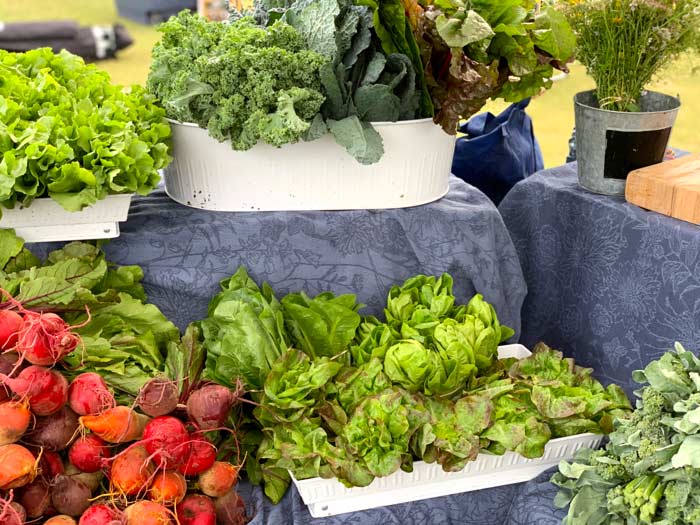
Chris likes to harvest his leafy greens no more than 2 days prior to market, but they can maintain good shape for 3-5 days in cold storage. This rule generally applies to fresh herb harvests as well.
3. Tomatoes, beans, squash – harvest last. (Or the next day.)
Once the root veggies and leafy greens are harvested, cleaned, and in cold storage, Chris moves on to less time-sensitive produce like tomatoes, snap beans, and squash. These types of produce are the easiest to clean.

The quality of tomatoes will diminish in cold storage, so Chris keeps them stored at room temperature. However, beans and squash hold up better in cold storage and maintain market-ready shape for 3-5 days after harvest.
4. Other produce
There’s way too much crop diversity in the world to provide tips and advice for all of it. Blueberries, pomegranates, apples, figs, sweet potatoes…

The main point here is to have a plan to get your specific varieties of produce to market as fresh and in as good of shape as possible. Obviously, exceptions apply for plants like garlic bulbs which require curing prior to sale.
Also, as a general rule, most farmers know that harvesting produce at the hottest part of a sunny day is a no-no because it’s going to quickly degrade in quality. During summer market season, Chris and crew start harvesting around 6:30am and are typically out of the field by 10am.
5. Make it a goal to be done, packed, and ready to go to market the night before.
If your market is on Saturday morning, you’ll ideally want to have everything ready to go and in one location no later than Friday evening. Plan accordingly.
All you want to do Saturday morning is put coolers, tents, and other market essentials into your truck and head to market. No produce harvesting, cleaning, etc.
Note, this is a goal, not necessarily what happens because a farmer is always at the mercy of unexpected circumstances. As Chris says, “I’m often harvesting late into the evenings or bagging product past midnight, then getting up before market to finish harvesting and getting packed up.”
Step 3. Have a checklist of the basic supplies you need for your farmers’ market display/stall.
The exact supplies you need for your farmers’ market stall and display will vary based on what you’re selling, the specifics of your market, and the weather forecast.
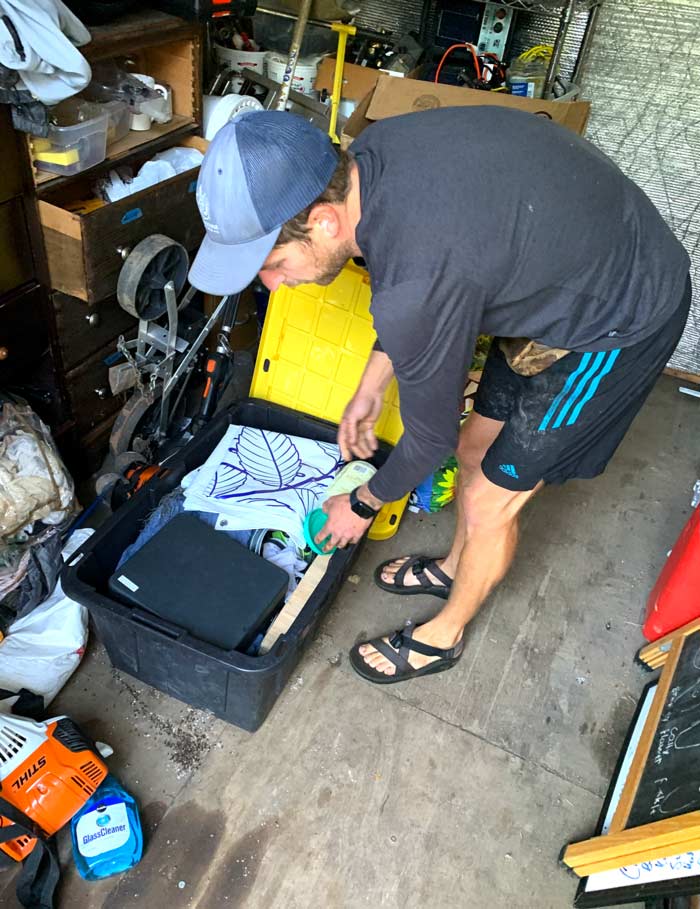
In addition to his produce coolers, here’s a basic checklist of what Chris has to bring to market each week at the outside, open air TR Farmers’ Market:
- Vendor tent
- Weights or stakes to make sure tent doesn’t take flight
- Backup coolers for additional/backup produce
- Farm logo banner/signage
- Chalkboards/whiteboards to display prices (plus chalk or markers)
- Tables
- Table cloths
- Display baskets / shelves / boxes
- Produce baskets as-needed for individual produce packets
- Payment supplies (cash box with change, card reader, other digital payment processing)
- Bags for shoppers – people can buy more if they can carry more (bags don’t have to be fancy, only functional)
- Misters of cold water to keep produce from going limp
- Display flats to pour cold water into to keep certain produce fresh (like head lettuce or frisée chicory)
- Other necessary decorative accessories (flower bouquets, hay bales, etc)
- Promotional materials (CSA information, business cards, etc)
- Cutting board or taste test supplies for items that may generate higher sales once customer takes a closer look or taste
*Note that there is no mention of chairs or stools in this checklist. Chris doesn’t use them or recommend them at farmers’ markets. Why? “I feel that sitting gives off a lazy/unwelcoming/aloof vibe that doesn’t quite say ‘morning, come on in, what can I help you with?'”
Also, have a backup plan for everything. What happens if your truck doesn’t start? What happens if your helper (or you) calls in sick?
Step 4. Set up a winning farmers’ market display.
The first rays of sun are just rising over the horizon as you pull up to the farmers’ market with the beautiful, fresh produce you’ve spent countless hours producing, battling pests and weather all along the way. But if you just dump your produce on to a table or into a bucket, you’re not going to generate a lot of excitement from market shoppers.
Now is where having a basic understanding of consumer psychology and a keen eye for aesthetic details comes in handy. (Chris likes to talk about the work of Edward Bernays, Sigmund Freud’s nephew, who many regard as the founder of modern PR and marketing.)
In addition to having abstract marketing knowledge, Chris has lots of hands-on experience to draw on. He’s been selling at farmers’ markets around the US for over a decade, setting up and running hundreds of market stands during that time.
In short, if you need help figuring out how to set up an attractive, effective farmers’ market display/produce stand, Chris is the guy to ask.

Here are Chris’s top 6 tips for creating a winning farmers’ market display and boosting sales:
1. Design the optimal table configuration for your product(s) and market.
What’s best: U-shaped, L-shaped, or single table farmers’ market display? The answer will vary depending on market space allowances, traffic flows, what you’re selling, and how much product you have.
Weather and/or sun location may also factor into your table setup if you’re trying to keep produce under the shade of your tent or out of the rain.
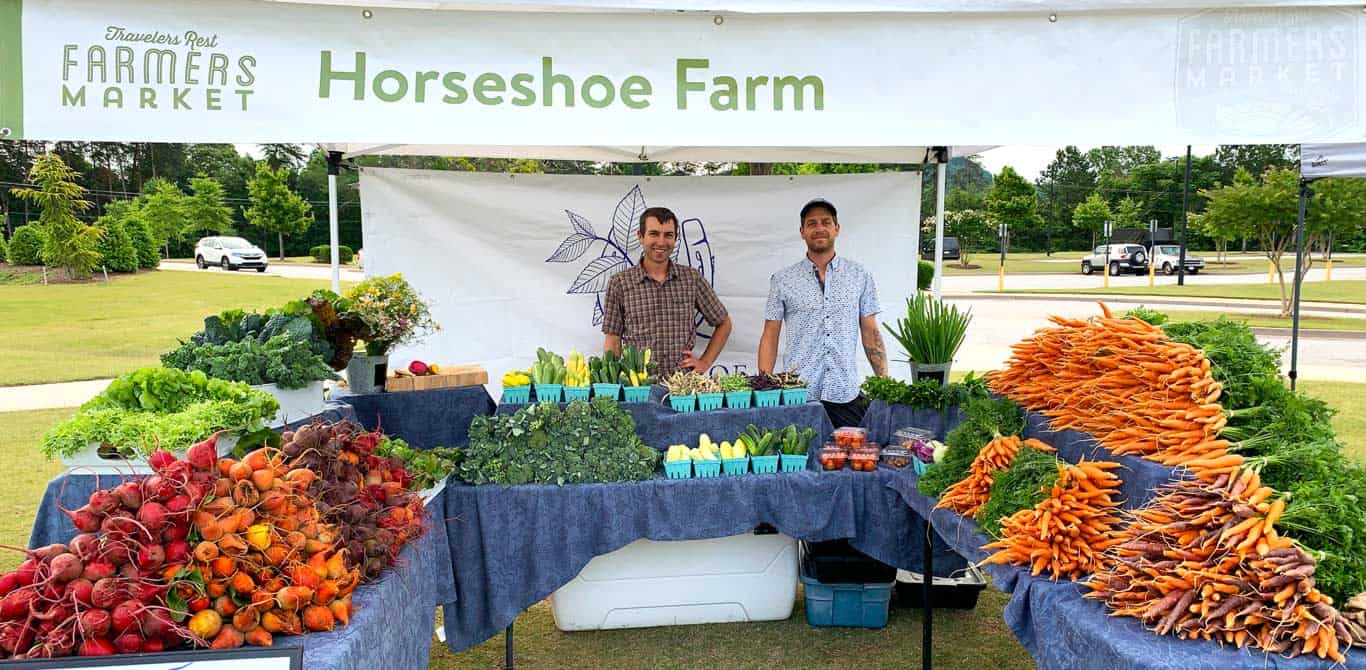
Chris prefers starting the day with a U-shaped 3-table display setup:

As his produce sells out, he consolidates back to two tables. Then one table. Why? See tip #3.
2. Provide easy-to-find & read prices
Make it easy for shoppers to know how much things cost. Some farmers like to put price tags right on or next to a specific produce variety, and that works perfectly well in many situations.
However, Chris prefers to use a whiteboard or chalkboard. It’s a single item that doesn’t fall off the table, is hard to lose, and easy to update. And given the ample space people have to walk around in front of his tent while approaching, it’s easy for them to check prices.

Also, given the diversity of product offerings he has, having dozens of individual price tags on the table would make it look cluttered and take away from the visual appeal of his produce. It would also add significant time to his preparations each week since he’d have to create so many new price tags.
3. Create the sense of abundance and utilize three dimensions.
Horseshoe Farm stacks empty totes under their table cloths which allows them to provide additional dimensions to their market display and get more produce into the visual frame of shoppers.

People are enticed by the visual sense of abundance. Whether you’re consciously aware of it or not, you’re more likely to buy carrots from a vendor with a heaping pile of carrots than you are to buy carrots from a small pile.

Chris’s farmers’ market displays are piled high and deep with an abundance of lush, gorgeous produce. As his produce piles get diminished, he first tops them up with backup produce from his coolers.
As he runs out of produce, he pulls his produce back to a 2-table, L-shaped configuration so he can maintain the “illusion of abundance.”
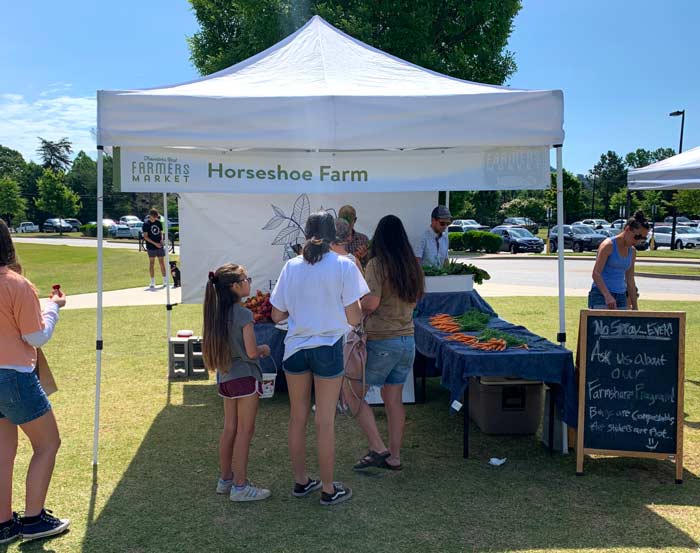
Finally, one table.
Eventually, he’s all sold out!

3. Keep it fresh.
Especially on hot sunny days, some varieties of produce are going to require extra care in order to maintain a fresh, bouncy appearance. Examples: chard, lettuce, fresh herbs.
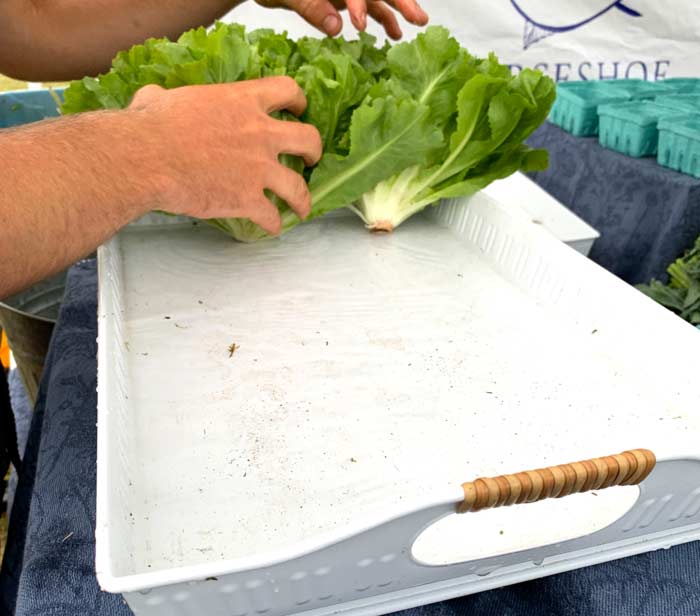
A few methods to keep these items looking as good as possible:
- Keep fresh produce in the shade and out of the sun, however possible (tent location, moving produce to different tables, etc).
- Only display what you need to fill out a produce section and keep your reserve/backup supply in a cooler.
- Produce like head lettuce and frisée chicory hold up well when their bases are put in trays of cold water.
- Have misters of ice cold water on hand to spritz produce as-necessary.
4. Be colorful.
Who isn’t enticed by colorful food and colorful people? Chris’s farmers’ market displays are a visual feast, a kaleidoscope of colorful, texture-rich foods.
Also, even though cut flowers aren’t his primary focus, you’ll always see a colorful bouquet of flowers on display at Horseshoe’s stall, grown on the farm and provided for additional beauty. If someone asks how much a bouquet costs, he’ll happily come up with a price.

Years back, Chris apprenticed under “Farmer Greg” at Marigold Hill Organics outside Chicago (one of multiple farms Chris worked on before starting his own farm). Greg grew a large beard and wore a cowboy hat, which helped him stand out at the Green City Market in Lincoln Park in Chicago. Customers loved him, remembered him, and talked about him.
So try to make yourself stand out and be memorable. If you blend in, you’re less likely to attract eyeballs, be remembered, or talked about.
Chris often wears brightly colored “tacky” Hawaiian shirts to market. He also sports some rather impressive vegetable tattoos on his arms (his tattoos exist for personal reasons, but they help him stand out). He and his Farm Manager, Capers Foster, are also handsome fellows, which doesn’t hurt.
(Sorry ladies, Chris is spoken for. Good news: Capers is currently a bachelor, so stop by and say hi while veggie shopping.)
It’s also important to make sure customers know who the workers are in case they have questions. If you’re behind your table, this is easy enough to manage. And sometimes it might make sense to wear branded clothing (such as apron or a t-shirt) with your farm name/logo on it.
5. Be kind. Be generous.
Chris and Capers are two of the most genuinely nice, friendly people you’ll ever meet. If I (the writer) was challenged to come up with a single criticism of Chris it would be that he may actually be too generous at times.
If our roles were reversed and someone came to my farmers’ market stand and asked if I’d be willing to take a discount, I’d have trouble being friendly to them given the high degree of knowledge, skill, and effort it took to make that produce possible. However, on the rare occasion this happens, Chris remains abundantly cordial and tells the person to come back near market close.
If he’s still got produce available, he’ll help the shopper by reducing his prices. And if he’s got straggler carrots or beets in the bottom of his coolers that broke free from their stems, he might just give them to the person for free, especially if they seem to be in need.

On the rare occasion when he doesn’t sell all his produce at the farmers’ market (college football games, vacations, and bad weather can all seriously dampen market turnout), he’ll donate what he and his crew can’t eat to local food banks.
“I’d prefer it go into mouths even if it doesn’t make me money,” he says.
A final word
It’s almost impossible for anyone who has never grown food to fully grasp how much time, labor, thought, and skill goes into making a farmers’ market display like the one Horseshoe Farms’ produces for TR Farmers’ Market. Even more so when you consider that every bit of Horseshoe’s produce is grown using beyond-organic practices, without synthetic fertilizers or pesticides.
If you’re a farmer, we hope the tips and advise provided by Chris help you become more successful at your local farmers’ market. If you’re a shopper, we hope this information gives you a richer appreciation and gratitude for the local farmers who grow your food, with care for human health and the environment you share.

Read more articles in our Small Farm series:
- Small farm series intro: what is a small, regenerative farm?
- 15 tips to start a small farm using regenerative practices
- Small farmer choice: CSA vs farmers market vs wholesale
- What tools and infrastructure does your small farm need to succeed?
- Should your small farm get certified organic? Pros and cons…
- Organic weed control: how-to with farmer Chris Miller
And subscribe to our email list (below) to get new articles delivered to your inbox!