

How to transition between growing seasons using no-till organic gardening / farming methods
As an Amazon Associate, GrowJourney earns from qualifying purchases. Read more: terms of service.
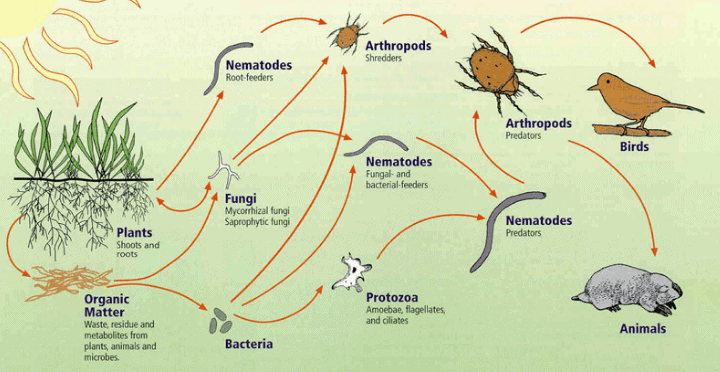
As we’ve written about elsewhere, we’re big advocates of no-till organic gardening and farming methods. These methods minimize soil disturbance, meaning the vast ecosystems of life underneath your feet don’t get destroyed each season when you till. Instead, the soil ecosystem continues to develop and build.
The benefits of learning and adopting well planned no-till organic gardening & farming methods are numerous and continue to accrue over time. Those benefits include:
- less work
- lower costs (due to lower inputs and labor)
- improved biological soil fertility
- improved soil carbon and soil organic matter (SOM)
- improved plant health
- reduced irrigation
- *fewer weeds (if properly managed)
All that sounds pretty good, right? If so, it might be time for you to consider learning about no-till and making the transition on your garden or farm.
Problem is, no-till organic gardening and farming is a fundamentally different approach to growing food than what we all grew up with. Also, our notions of what farming and gardening entail are largely the result of popularized media images: in a news segment or commercial about farming, are you more likely to see large tractors plowing the soil on clear cut fields or an intensive no-till organic farm – or even a food forest?
When Susan (my wife, aka “The Tyrant”) and I tell people we haven’t plowed our garden soil in a decade or that I am creating a no-till farm for Oak Hill Cafe & Farm, it seems difficult for them to compute the information.
“No till? How do you grow plants without tilling the soil?” It’s sort of like trying to describe a Prius to someone who’s only ever seen a horse-and-buggy.
Setting up a no-till organic/permaculture microfarm
To help you visualize how no-till organic gardening and farming works, we figured some photos with corresponding explanations would be helpful.
The farm portion of farm-to-table restaurant I managed started off as a field of grass and weeds atop hard-packed red clay soil. How does one start a no-till farm on a site with such conditions? It wasn’t easy.

Here’s what my partner, Chris Miller, and I did to set the farm up:
- Mowed the grass down as low as possible, leaving the chopped grass in place rather than bagging and removing it. (Grass trimmings are good food for soil microbes which then becomes good fertilizer for plants!)
- Placed about 8-12 inches of compacted leaves on top of the soil surface. The leaves served two primary functions: a) a weed block, killing all the grass and weeds in the field while leaving the plants + roots to decompose and become soil organic matter; and b) a soil amendment that would slowly break down and feed the biology in the soil (worms, fungi, bacteria, etc).
- Installed rows of compost (on top of the leaves) into which we put seedling transplants or direct-sowed seeds. Since the leaf layer is very high in *carbon, we also added some additional OMRI listed composted chicken manure pellets to the compost to ensure that adequate bioavailable nitrogen would be present for the plants. (*If you bury carbon-rich materials like leaves or wood chips, it temporarily locks up soil nitrogen. However, this is not the case if you simply top-dress/mulch your beds with carbon rich materials.)

And then we were off and growing!
The biggest challenge so far? Groundhogs, which love to eat almost everything people do.

Step-by-step: transitioning from summer corn to fall crops on a no-till permaculture farm
After the first summer growing season, we transitioned to fall crops (beets, turnips, carrots, parsley, kale, Brussels sprouts, etc.).
In the photo sequence below, we’ll show you how we transitioned from rows of heirloom flint corn to rows of fall crops in a no-till system:
Step 1: Harvest corn rows.

First, we harvested the ears from rows of maize (which is called corn in the US). Initially, we’d planned to do “three sisters” (corn + pole beans + vining squash) and four sisters (three sisters + sunflowers) in these rows, but groundhogs ate all the other plants, except for the corn.

Step 2: Cut the corn stalks, leaving the roots in the ground.
Next, we used loppers to cut the corn stalks just above the soil surface, leaving the plant roots in the ground.

As a general rule, you always want to have living roots in your soil, since root exudates feed soil microbes. Even though the corn plants are nearly dead here, the roots will still continue to exude a little longer, and then they’ll decompose, which will also help improve the soil as microbes decompose them and convert them into soil organic matter and plant-available nutrients.
Bottom line: leave the roots of your old plants in the soil when you transition between seasons, unless your plants are diseased. For a deeper dive on this subject, see our article: Why you should almost always leave your old plant roots in the ground.

Rather than hauling off the corn stalks to a compost pile, we just laid them in the paths to compost in place and serve as a weed block on the walking paths. By late spring of next year, these stalks will have been completely broken down and converted back into soil.
Step 3: Rake off thin layer of leaves on top of rows.

In preparation for the next step (top-dressing with compost), we lightly raked off the thin layer of leaf mulch we’d put down over the corn rows. In June, this mulch layer was a couple inches deep and had decomposed down to almost nothing by early September. Why rake it off? To make sure we’re not locking up bioavailable soil nitrogen (as mentioned earlier) in our fall crops that are going in immediately after.
Step 4: Top dress each row with 2-3″ of compost.

Next, we added 2-3″ of compost to each row. Nope, no tilling required, just use the compost as a top-dressing and let rain, roots, and microbes work all that goodness deeper into the soil. We plopped on piles of compost with a wheel barrow, then spread it out evenly over the soil surface in each row with rakes.

The point of adding compost isn’t just to feed the next round of plants and boost biological soil fertility, it’s also disease prevention. The beneficial microbes in good compost help to suppress disease-causing, pathogenic soil microbes that might otherwise persist and proliferate from year to year. If you’re doing no-till in a small garden space and you do not have compost available, we highly recommend using these worm castings from Unco.
Do you have to add compost or worm castings before each planting if you’re doing no-till? Nope.
Whether or not you apply compost depends on: a) whether the next crop you’re putting in is a heavy feeder, and b) how good your soil is. You could also use a good organic pelleted fertilizer for heavy-feeding crops once you’re soil is well developed.
However, since we’ve only been working on this soil for less than a year and we’re putting in new crops that require high nutrition, we needed to add compost plus a little extra “poultry pellets.” It’s important to note that you can’t really over-compost your beds, but it’s very easy to over-fertilize your beds with highly concentrated chemical and mineral fertilizers.
Step 5: Seedbed prep with a field rake.
To get a nice clean seedbed, it really helps to have a “field rake” (here’s a good field rake).

Since our rows at the farm are 36″ across and the metal field rake is also 36″ across with closer teeth than a standard leaf rake, the field rake really helps to create a perfect seedbed for direct sowing or transplanting. In this case, we direct-sowed several different types of root crops.

In Summary...
This is just one example of a seasonal transition in a no-till organic farm system. Take the ideas and principles provided here, modify them to your setup, then apply them as needed during season transitions.

You can also get creative, especially when growing in smaller spaces! In our home garden at Tyrant Farms, we do seasonal transitions by interplanting new crops with old crops. For instance, in late summer-early fall we might put beets, kale, or lettuce in the shade of our tomato plants. As the tomato plants peter out, they’ll provide shade during the heat of the last days of summer before dying off in the fall as the edible understory plants need more sun and warmth.
On the opposite end of the sun cycle in the spring, we might transplant tomatoes and peppers in the middle of a patch of lettuce or kale (read about that in detail here). As the tomatoes grow, they’ll provide shade for the cool weather greens, thereby extending their season up to a month further into the hot summer.

Ultimately, you’re trying to always have living roots growing in your soil, while minimizing or eliminating soil disturbance. In our opinion, organic no-till gardening/farming is the best way to accomplish these aims, so start your no-till system now!
Questions? Ask away in the comments…



Hi Aaron. I love your website, especially this post on starting a “no till” garden. In 2017 my partner and I started a nonprofit called Deep Roots Project (www.deep-roots-project.org). We teach “no till, no dig, no pull” gardening in raised beds in Chicago and its suburbs. We have an experimental raised bed garden and build cedar raised beds. We were inspired by Charles Dowding in England and horticulturist friends. We use 100% thermophilic compost from a local dairy farm instead of soil blends. We also use microbe and nutrient rich worm castings from a farm in Wisconsin. We sell the cedar beds, compost and worm castings from our website. We have a team that installs our raised beds filled with compost. People love our method of regenerative gardening which we call “Transformational Gardening.” This year we want to reach more customers with a focus on the low income suburbs and Chicago neighborhoods that are “food deserts” where healthy fresh food is hard to get. Our local congressman in interested in finding funding for us that can subsidize raised beds in yards of low income families. Beginner gardeners especially like our regenerative method since it’s so much easier than traditional organic gardening and produces huge yields from the first year. But it’s difficult to explain the method to new folks who are skeptical that food will grow in 100% compost without tilling. Can you help us find videos and stories of gardeners who have tested traditional soil and tilling against growing in 100% compost without tilling and with worm castings? It’s more convincing if all other factors (plants, sun, water, etc.) are the same. Could we talk by phone? An email reply would be great too.
Estelle Carol, co-executive director, Deep Roots Project,
estelle.carol@deep-roots-project.org, 708-616-6473.
Hi Estelle! Love what you all are doing. I don’t spend a lot of time on social media / online, but there are likely lots of quality videos on YouTube about no-till organic gardening that could suit your needs. Two sources of inspiration and validation you might find helpful:
1. Singing Frog Farm in Sebastopol, California. They’re an intensive small farm that’s been successfully doing no-till organic for years. Pretty sure there are lots of videos that they’ve produced and that others have produced about them, including presentations and tutorials.
2. Presentations by Dr. Elaine Ingham, a soil microbiologist, who really dives deep into the science of this type of gardening/farming and why and how it’s effective. She’s the person who named the “soil food web” and she has published hundreds of peer-reviewed papers on this and related topics.