
Why you should leave the roots from your old garden plants in the ground
As an Amazon Associate, GrowJourney earns from qualifying purchases. Read more: terms of service.
Learn why (and how) to leave the roots from your old garden plants in the ground to help feed your soil organisms, increase soil organic matter, and grow healthier plants!
We’re fortunate enough to live in Greenville, SC, a place where we can grow food year round – with a little extra effort in the winter months. Each season offers different crops, and it’s nice being able to tell what month it is by what’s on our dinner plates.
In addition to providing a steady stream of garden-fresh food for us, year round gardening means there are always living plants/roots in our garden beds which are providing a steady stream of food for soil organisms as well.
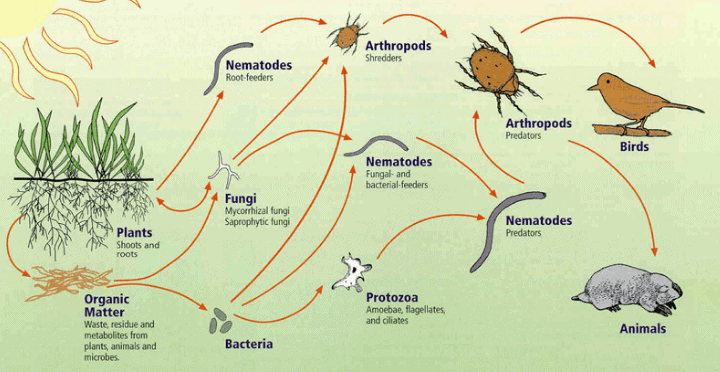
Plant roots feed your soil microbes and soil microbes feed your plant roots
Plants devote a significant amount of their energy to cultivating and feeding beneficial soil microbes via their root exudates. In exchange, those symbiont microbes help feed and protect the plants.
In nature, when a plant dies, there’s nobody to come along and yank it out of the ground, roots and all. Instead, the roots are slowly decomposed by soil microbes deep underground.
Worms, bacteria, fungi, and other organisms all nibble away, ultimately converting the dead roots back into nutrients available for other living plants. And the cycle repeats. In the process, soil organic matter, soil carbon, and overall soil structure are all improved.
The above ground portions of a dead plant undergo a similar process of decomposition as the dead roots, although much more of the above ground material is volatilized into the atmosphere as it decomposes, rather than being immediately recycled into the soil.
Also, the above ground portions of a dead plant will often play host to eggs of beneficial and predatory insects – and yes, some pest insects as well. As we’ve detailed before, 95% of insects are beneficial or benign, so it’s important to learn to ID them and work with them.

Why you should leave the roots from your old garden plants in the ground
What does all of this information mean for your garden?
When you’re preparing your garden beds for a new season, don’t rip your plants out of the ground, roots and all. If you do, you’ll be robbing your soil microbes of a good meal and degrading your long-term soil fertility. You’ll also be inadvertently removing a lot of the good microbes that live around the root systems of your old plants – microbes that could help your future plants.

What should you do instead of ripping out your old plants, roots and all?
First, cut your plants just above the soil surface and leave the roots from your old garden plants in the ground as a food source for your soil organisms. If you’re not going to plant the bed immediately (ex: if you’re heading into a brutally cold northern winter) you can lay the above ground parts of the plant on the soil surface as a mulch, which also provides safe habitat for your overwintering beneficial insects/eggs.
If you prefer a “tidier” look, simply compost the cut plants before putting a layer of mulch down on the soil surface.
What about removing diseased plants from your garden?
Throw away or burn the above ground portions of any diseased plants that you’ve removed. As for the roots, the disease organisms are already present in the soil anyway, regardless of whether you remove the roots.
You’ll want to top-dress beds where diseased plants grew with compost or worm castings to introduce beneficial microbes to outcompete the pathogens. You’ll also want to be sure NOT to plant the same type of plant in that bed for a few years so as to starve the disease-causing pathogenic organisms of a food source (aka “crop rotation“).
Video: transitioning beds between seasons and removing plants in a no-till organic garden/farm system
Want to see these tips in action?
Watch the video below showing you how one of the best intensive, no-till organic farms in the country transitions between crops using the exact methods recommended above. (If you don’t want to watch the whole video presentation, just watch minutes 27-30.)
Got questions about how to leave the roots from your old garden plants in the ground or no-till organic growing methods in general? Ask away in the comments!




So I got my tomato better bush plant on the 28th an I’m wondering can I since I’m a new gardener an I don’t like roots or how they look can I leave them in there to die so the root nematodes can feed on it including the stem it’s in a trellis container could I use a chemical herbicide to dissolve the roots.
Root knot nematodes will deform and stunt live plant roots, but they won’t completely consume the roots. Other soil organisms will completely break down dead roots over many months, turning the roots back into soil organic matter and bioavailable nutrients. If you want to kill root knot nematodes, we’d suggest buying predatory nematodes which you can apply as a soil drench. Herbicides kill plants, they do not cause the roots to dissolve. We do not recommend using that method – or using herbicides in general. Your tomato plant’s roots are below the soil surface, so they do not present any aesthetic issues. If you don’t like the way the visible parts of the dead plant look, simply cut the plant at the soil line and compost the above ground parts.
can I plant seeds into a mulch of leaves/dried grass while leaving the roots of grasses/weeds in the ground ?
Any seeds planted should be sown at the recommended soil sowing depth specific to the seed type. The emerging roots will need to embed in soil to begin properly uptaking water and nutrients – the roots likely won’t be able to do that if they are laying in a mulch of leaves and grass. Preparing a proper weed-free seed bed is also important for optimal germination and seedling growth wherein your new seedlings aren’t shaded out or out-competed by existing weeds. This article is more focused on leaving the roots from prior dead crops in the ground to serve as food for the soil/microbes. Please see this article for more on how we transition between crops in a no-till organic garden system: https://www.growjourney.com/seasonal-transition-no-till-organic-gardening/
Hi! I followed this advice with my vegetable raised beds last year and just found it to follow again. Just curious, what’s the purpose of cutting the plants at all? To speed decomposition? Is it just to make planting in spring a bit easier? Thank you!
Hi Katie! Thanks for coming back and for your good question. For us, the purpose of cutting the old plants down is to make room for the new plants that we put in behind them. We have living plants in our garden 365 days per year, even throughout the winter. Since we do have deep freezes here (we just got bumped to zone 8a in the latest USDA update), we have to protect even our cold hardy plants (kale, chicory, parsley, etc) using row cover. So a large dead tomato plant (as an example) has to be removed to both make room for the next crop and to allow the row cover to fit snuggly.
However, you do not HAVE to cut back these plants if you don’t want to or you intend to continue to grow crops throughout the year. Also, some people just don’t like the aesthetics of dead, brown plants flopped over in their garden. Also of note: this dead plant material is home to overwintering insects and insect eggs, many of which are beneficials, so it shouldn’t be tossed into the trash.
Hope this helps and happy gardening!
Hi,
I’m wondering when leaving the roots in the ground and mulching on top, do I continue to water in the winter. We aren’t planning on replanting these beds until Spring. I live in zone 8b in the Mojave Desert.
Hi Kim! In order for the dead plant material to decompose and be incorporated into your soil by microbes and “macrobes” (like earthworms), water is necessary. Where we live (South Carolina) rain is plentiful year round including throughout the winter, and we don’t have to irrigate in the cool months. Since you live in the desert, you may need to irrigate to aid decomposition of your old plant roots and mulch. 1″ of water every 2-3 weeks should suffice. Hope this helps and best of luck!
thank you for this
Hi,
Should I pull the roots of previous vegetable plants if my beds are immediately going to be replanted? In other words, should roots be left in throughout the planting season or only to over-winter?
Yes, we recommend leaving roots from your prior plants in the beds when you put in new transplants – that’s what we do as well. Those old roots will become worm food which then becomes worm castings/poop which then feeds your new plants. Think of those old roots as a slow-release fertilizer. Ideally, you can also top-up the garden bed with a 2-3″ layer of worm casting or compost during the crop transition as well.
Hi Aaron, I’m a very excited first-time no-dig gardener. The plants have taken off, everything is looking fantastic and the vege crop is already amazing with more to come. Unfortunately there are also plenty of caterpillars helping themselves to the corn. I am carefully removing them one at a time (TBH it’s quite meditative and satisfying, so I don’t really mind). My question is, if I squish the caterpillars good and flat (also satisfying), is it safe to leave the dead ones in the garden, or should I remove them like diseased plants?
Sure, you can leave your squished caterpillars in your garden. Just drop them on the soil surface and you’ll be amazed by how quickly they’re consumed by other organisms. Then the caterpillar bodies get converted right back to plant-available nutrients/soil via the excreta of the critters who ate them. Also, if you’re interested, a highly effective organic solution for corn caterpillars is Bt spray, which is made from a bacteria (Bacillus thuringiensis) that kills caterpillars but is harmless to humans and other off-target organisms. However, you can keep up your squish method if you find it satisfying or cathartic – ha!
What are your recommendations for fern? I have quite a bit in my garden and they pop up everywhere, daily! I rip them out each time but it seems endless. Thanks
Hi Irene! Sorry you’re having trouble controlling ferns in your yard. On part of our property, we grow native fern species that don’t spread via runner, but it sounds like you have one that is spreading via underground runner. Managing a perennial plant species that runs aggressively can be a challenge. You basically have to continuously remove both the parent plant and the runners to the point that the plant(s) aren’t allowed to photosynthesize enough to produce the energy necessary to continue growing. Eventually they run out of steam and die. The hard part is that it can sometimes take a year or more to eradicate them. Another option is to sheet mulch the area and start over with new plants in the spring.
Hello, I recently bought a lot and had a home built on it in Southern Indiana. My problem is what looks to be corn. It looks like corn stalks growing in many sections of my front, back and side yards. I’ve pulled out a lot of the smaller stalks but every day my yard looks worse and the weeds and corn grow higher. I’m embarrassed for myself and my neighbors. If I get someone to come and cut down the corn and weeds at the base will the corn grow back up if it’s not pulled out with it’s root? PLease help…my yard looks terrible! There must have been a cornfield here in prior years. Thank you!
Corn/maize is an annual plant whose seeds don’t easily overwinter and germinate without human assistance. It’s very unlikely that you have maize as a weed in your lawn. Corn would be very easy to kill. Cutting it down would do the trick and it wouldn’t be able to further reproduce.
However, it’s more likely you’ve got something like Johnson grass (Sorghum Helapense) not corn. Johnson grass is a perennial weed that spreads via underground rhizomes and seed. The first thing you’ll need to do is positively identify what plant you’ve got. You can even reach out to your local university extension office if you need help with identification. From there, you can look up methods for eradication, ideally utilizing organic solutions/control methods rather than synthetic herbicides.
This is our first year trying a raised bed garden in Arizona (30 miles S. of Phx). Our cucumbers keep producing flowers but no cucumbers. Same with the green beans. There were a few beans approximately one inch in size that subsequently died. We got a couple good harvests of the kale and lettuce but no luck with spinach. They share space with each other (with adequate spacing per planting instructions.) Our strawberries are in a space of their own and there are millions of what look like little gnats running around in the soil. No success producing berries. They did spread with a few runners but now they aren’t doing anything. We have fertilized, used organic bug spray, bought a meter to measure moisture and pH of the soil. Still no luck. Oh, and our tomatoes in a hanging basket have produced a few tomatoes and have several green ones so I am letting them do their thing. Should I pull all the plants in the garden bed, roots and all, and start over next year?
No, we wouldn’t recommend pulling your plants. Instead, view this year as both an experiment and educational experience. You’ll be able to take what you learn into future years.
Based on the symptoms you’re describing, our first guess is high temperatures are causing your plants to both abort their fruit and have stunted growth. Looking at current Phoenix area weather, it shows high temps over 100°F. Those temperatures will definitely cause all the plants you mentioned to abort their fruit and/or stunt their growth.
In your climate, shade cloth, misting systems, sunken (rather than raised) garden beds, and perhaps even fans might be necessary to grow standard garden produce during the warmest months.
As for the insects you’re describing, we’re not familiar with your region’s flora and fauna, but it sounds like you’re describing fungus gnats. The adults are not a problem for your plants, but their larvae will eat your plants’ roots, weakening or even killing them. The best way to get rid of fungus gnats on your seedlings or in your garden soil is applying a soil drench of predatory nematodes. They’re microscopic predators that will eat the larvae of the fungus gnats. This alone may give your plants the fighting chance they need to recover. You can buy predatory nematodes on Amazon here: https://amzn.to/3Q1u38I (that’s an affiliate link to the predatory nematode product we use and recommend).
Hope this information helps. Also, remember that learning to garden is no different than learning to ride a bike. You’ll fall off and fall down along the way, but keep learning and going!
I’ll second the comment about fungus gnats. They like warm damp soil and they ruin the roots causing the plant to be stunted. I’ve had some plants grow to 2″ instead of 10″. Don’t feel bad about having them! It’s all part of nature, but everything does better in moderation and I assume yours is an infestation. Mine came from a premium brand compost (it was riddled with them and ruined a lot of my pots).
My parents have a raised bed in their backyard, 16×4. 2 years ago, they planted a row of carrots down the middle length of the bed that were never really successful, They left the bed to sit for the last 2 years, and this year we went out to pull the weeks and go again. But throughout the entire bed there’s tons and tons of white carrots and their roots growing throughout the entire box. We don’t want carrots this year. But Short iof shoveling everything out and refilling with fresh dirt, I’m not sure how to get them out. There are so many.
Can we just till up the soil and leave them as food for the soil and go ahead and plant new stuff on top?
Hi Brent! Hate to say it, but what you’re describing doesn’t sound like carrots. The roots on carrots will die and rot after setting seed. While it’s possible that your carrots seeded out in the bed and grew new carrots, this is unlikely given competition from other plants/weeds. Also, most carrots aren’t white in color – unless your parents happened to select a white carrot cultivar years back which then grew true to seed.
More likely, some other type of weed with a large white taproot has taken over the bed. Not sure where you live, but in our area, one such culprit would be dock (common one for us is curly dock, Rumex crispus). If what you have is dock, the aggravating thing about it is you will need to get all the roots out or it will grow back. Getting a positive plant ID on what you have in your bed is probably a good starting point, but based on the growth habit you’re describing, it sounds like root removal may be necessary before planting your garden.
Love the graphic illustration. But isn’t it hard to plant on that soil again if it still has some roots?
Depends on a lot of factors: climate, soil type, root density and maturity of plants that were removed, etc. However, generally it’s quite easy to plant in spots where previous plants’ roots are decomposing. This is especially the case if you top-dress those beds with 2-3″ of compost or worm casting right before transplanting or seeding.
I just started my business as a cut flower farmer. I have a small plot of land but I’m growing a lot of rows of flowers. I’m changing out my sunflowers right now for more planting and I’m just curious if I should pull the whole sunflower out of the ground or just cut it to the ground I feel like it’s gonna be hard to plant around those roots I’m going to top it with another layer of compost before I put in the new transplants. Any advice would be greatly appreciated.
Hi Michelle! This is a great and interesting question. As we’ve mentioned in other comments on this topic, there are exceptions to every rule…
First, we should start off by noting that sunflowers (Helianthus annuus) are well-documented for their allelopathic properties, e.g. chemicals in sunflower plants can kill or severely inhibit the growth of other plants. That means if you’re using sunflowers in crop rotation, the next crop you grow in succession may have trouble growing.
A lot of sunflowers’ allelochemicals are found in the roots and root exudates. So, for this reason alone, it probably makes sense for you to remove as much of the sunflower roots as possible before sowing or transplanting your next crop.
The other factor (as you noted) is the ease of getting your next crop in the ground if you’re trying to do so in commercial-scale production with larger plants like sunflowers grown prior. It can be done, but it will necessitate: 1) getting the prior plants cut as close to the ground as possible, and 2) adding a layer of compost over top to prep a transplant or seed bed. Having experience doing this, we can say it’s a lot easier with direct-sown crops rather than transplants unless you really go on heavy with your compost (4+ inches).
Long story short: given the allelophathic properties of sunflowers and your commercial-scale operation, it makes sense to pull those sunflower roots out. You can still compost those sunflower plants though. The allelochemicals should degrade and/or dilute enough in a quality composting system such that the final compost will not inhibit future plant growth.
Hope this helps and sorry for the slow response!
I found it helpful when you said that you must not rip your plants out of the ground to ensure that you won’t rob your soil microbes of a good meal. This is a great tip for my mother who is planning to purchase garden supplies since she bought a house with a spacious garden. Your tips will surely help her find the right type of soil and do the necessary steps to achieve a greener garden.
Hi, I am wondering about leaving the roots of stubborn and persistent perennial weeds? I think they can just grow from the root system— I’m talking about Jerusalem artichokes ( not weeds but are spreading by rhizome ) and mint, milkweed, and mullein. I have a small organic yard and I am organic so there are a lot of weeds that are making it impossible for my new plants or plants I want in my garden to grow. This is a big dilemma for me.
Hi Monique! There are exceptions to every rule. With pervasive/invasive perennial plants that you don’t want in your yard/garden, you definitely don’t want to leave the roots in the ground if that allows them to persist. However, if you’re sheet mulching the spot where such a plant is living in order to eradicate it, you can leave them in the ground. Most annual weeds growing in a garden can be suppressed with mulch – that process is much easier to do when you’re using transplants rather than direct sowing seeds.