
Why you should leave the roots from your old garden plants in the ground
As an Amazon Associate, GrowJourney earns from qualifying purchases. Read more: terms of service.
Learn why (and how) to leave the roots from your old garden plants in the ground to help feed your soil organisms, increase soil organic matter, and grow healthier plants!
We’re fortunate enough to live in Greenville, SC, a place where we can grow food year round – with a little extra effort in the winter months. Each season offers different crops, and it’s nice being able to tell what month it is by what’s on our dinner plates.
In addition to providing a steady stream of garden-fresh food for us, year round gardening means there are always living plants/roots in our garden beds which are providing a steady stream of food for soil organisms as well.
Plant roots feed your soil microbes and soil microbes feed your plant roots
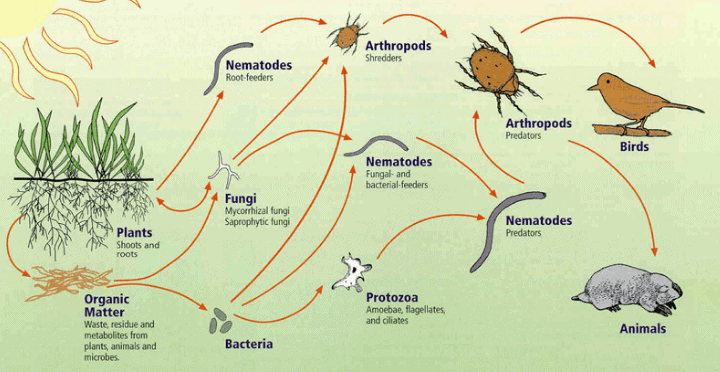
Plants devote a significant amount of their energy to cultivating and feeding beneficial soil microbes via their root exudates. In exchange, those symbiont microbes help feed and protect the plants.
In nature, when a plant dies, there’s nobody to come along and yank it out of the ground, roots and all. Instead, the roots are slowly decomposed by soil microbes deep underground.
Worms, bacteria, fungi, and other organisms all nibble away, ultimately converting the dead roots back into nutrients available for other living plants. And the cycle repeats. In the process, soil organic matter, soil carbon, and overall soil structure are all improved.
The above ground portions of a dead plant undergo a similar process of decomposition as the dead roots, although much more of the above ground material is volatilized into the atmosphere as it decomposes, rather than being immediately recycled into the soil.
Also, the above ground portions of a dead plant will often play host to eggs of beneficial and predatory insects – and yes, some pest insects as well. As we’ve detailed before, 95% of insects are beneficial or benign, so it’s important to learn to ID them and work with them.

Why you should leave the roots from your old garden plants in the ground
What does all of this information mean for your garden?
When you’re preparing your garden beds for a new season, don’t rip your plants out of the ground, roots and all. If you do, you’ll be robbing your soil microbes of a good meal and degrading your long-term soil fertility. You’ll also be inadvertently removing a lot of the good microbes that live around the root systems of your old plants – microbes that could help your future plants.

What should you do instead of ripping out your old plants, roots and all?
First, cut your plants just above the soil surface and leave the roots from your old garden plants in the ground as a food source for your soil organisms. If you’re not going to plant the bed immediately (ex: if you’re heading into a brutally cold northern winter) you can lay the above ground parts of the plant on the soil surface as a mulch, which also provides safe habitat for your overwintering beneficial insects/eggs.
If you prefer a “tidier” look, simply compost the cut plants before putting a layer of mulch down on the soil surface.
What about removing diseased plants from your garden?
Throw away or burn the above ground portions of any diseased plants that you’ve removed. As for the roots, the disease organisms are already present in the soil anyway, regardless of whether you remove the roots.
You’ll want to top-dress beds where diseased plants grew with compost or worm castings to introduce beneficial microbes to outcompete the pathogens. You’ll also want to be sure NOT to plant the same type of plant in that bed for a few years so as to starve the disease-causing pathogenic organisms of a food source (aka “crop rotation“).
Video: transitioning beds between seasons and removing plants in a no-till organic garden/farm system
Want to see these tips in action?
Watch the video below showing you how one of the best intensive, no-till organic farms in the country transitions between crops using the exact methods recommended above. (If you don’t want to watch the whole video presentation, just watch minutes 27-30.)
Got questions about how to leave the roots from your old garden plants in the ground or no-till organic growing methods in general? Ask away in the comments!


Hi I am wondering about leaving the roots of stubborn and persistent perennial weeds? I think they can just grow from the root system— I’m talking about Jerusalem artichokes ( not weeds but are spreading by rhizome ) and mint and milkweed and mullein. I have a small organic yard and I am organic so there are a lot of weeds that are making it impossible for my new plants or plants I want in my garden to grow. This is a big dilemma for me.
Aaron, My husband insist on digging up all the old roots from the last crops and turning over all soil and amending with new if needed to fill my raised beds. He thinks they steal water for the new plants. Not only is this getting harder for me to do, if feels somewhat unnecessary..
Your thoughts, please
Sue
Hi Sue! Well, I certainly don’t want to get in the middle of a spousal spat – ha! However, the idea of leaving roots from previous crops in the ground to aid in long-term soil fertility/health isn’t just my idea. It’s backed by solid science and practiced by organic farmers we know. We’ve also been doing it for years. Soil is a living system comprised of trillions of microbes and macrobes. Living and dead roots beneath the soil surface combined with decomposing plant materials on the soil surface are the upstream fuel that feeds the whole soil system. Another benefit: it’s less work for you and your husband. 🙂
So glad I found your article. Zone 8b, I was debating whetuer to pull the pea plants that are finishing up or just cut above ground. Leave the roots it is!
Yay! Yes, keep those roots in the ground. If they’re alive, they’re feeding soil critters via their exudates, and building soil structure and fertility in the process. If they’re dead, they’re feeding other soil organisms as they decompose and also building soil structure and fertility. Either way, plant roots are an essential ingredient for building healthy soil – and nitrogen-fixing legumes are one of the very best.
Ohhh.. I just ripped out my harvested cabbage roots today. Can I put them back?
Ha, no problem Vivian. It might be a little difficult to put the roots back in your soil at this point, just plan to do so in the future. 🙂
Thanks for the article
I’m converting a garden bed with weeds, a few plants and small trees and bushes to grass (transplanted or removed everything else). Is leaving the roots good for that? Or will undesirable things grow in the grass? will it inhibit grass growth? some of the roots are close to surface or sticking out of the seeded dirt.
Nature abhors a monoculture, which is typically what most homeowners want their grass lawns to be. No matter what, there are going to be seeds and unwanted plants that will spring up in your grass lawn – and a little biodiversity is good! If the roots from previous trees are on the soil surface, that’s going to keep grass from setting roots in that particular spot until the roots decompose. You’ll probably want to remove those roots before seeding grass or laying turf.
We live in the Midwest and have crazy cold winters… I get the leaving the roots in, but what do I do with the rest? (Ex. Big dead sunflower stalks, tomato plants, pepper plants, etc) ?? This is probably a very basic question, but I’m new to gardening and haven’t composted (yet) and don’t have a mulcher…
Hi Susan! There’s really not a right or wrong answer to your question. It depends… A few options:
1. You can lazy compost them – put them into a designated pile of yard waste and wait.
2. You can chop and drop them, then cover them with mulch for a tidier look. (Just call a tree service company for a wood chip drop.)
3. You can be lazy and just leave them as-is sticking above the soil. By the time your next warm weather planting season comes around, they’ll likely be on the ground and almost entirely decomposed.
Wow – Thanks for the explanation! That makes sense, and I really appreciate your taking the time to help me out. I will go with your advice. 🙂
Thank you! That sounds great. My only remaining question is what happens when the new plants’ roots reach the 2 in. line where the old roots are sitting. I don’t know how quickly the old roots decompose. ?
I’m not sure there’s any research out there to confirm exactly what will happen, which will likely vary by season and other circumstances. However, having done this many times with many plant species, we can say for certain that the new plants don’t have any trouble growing so long as they have that head start in compost or worm castings. If I had to venture a guess, here’s what’s happening underground: if the right symbiont microbes are present as the new plants get growing (which is where compost/worm castings help), then the new plants are able to further cultivate additional symbiont microbes (bacteria and fungi) as their root systems grow. They’re also able to optimize the Ph of the soil immediately around their rhizosphere. Although most early succession annual plants (tomatoes, kale, etc) prefer bacteria-dominant soils rather than fungi-dominant soils, they still have fungal partners whose hyphae cover and extend beyond their root systems, bringing water and nutrients back to the roots in exchange for sugar/carbohydrates that the plants make via photosynthesis. The fungi and bacteria associating with the roots of the new plants are able to mine nutrition and water from within and without the root systems of the dead/decomposing plants so the new plants don’t skip a beat.
Hello – Thanks so much for addressing this. I’m trying to plant a Fall garden now in central Texas and am new to both gardening and no-dig methods. I don’t understand *where* I can plant the new seed or transplant if there are still roots filling the space underground. For example, if I cut down my finished tomato plants now and leave the roots in and do the same with all other plants, where will my new seeds and transplants have soil to root in?
Hope I’m making sense. Can you clear this up for me? Thanks!
Hi Sarah! Great question. If your soil is currently a dense mat of annual roots from your previous plants, then you can top-dress your beds with ~2″ of finished compost or worm castings prior to transplanting seedlings or direct-sowing seeds. This will give new plants a nice jump start, add great biology/microbes to your soil, and provide immediate nutrition as the new plants get going. We actually recommend doing this between season transitions anyway. Hope this helps, and let us know if you have other questions.
Thanks for your interesting article. I just cut down a 9 year old Hebe and there are thick, woody roots. Leaving them to decompose will take forever, especially in our temperate Scottish climate. I’d love to save myself the work, but the roots have taken over the entire raised border and it’s impossible to dig because of them. Any thoughts? Thank you!
Hi Jane! Sorry to hear that. If you need to remove dense tree roots manually and you don’t have access to heavy machinery, we’d recommend using a root slayer shovel, if you can get them there in Scotland: https://amzn.to/31UgQq4. These will make the work of removing roots WAY easier. Hope this helps and best of luck!
How long do roots typically take to decompose and is there any natural ways to speed up the process?
I am going to have 3 beds (12ft sunflowers, tomatoes and watermelons) that will be cleared for the fall.
I mulch them as well if that matters
Rickesh: how quickly your dead garden plant roots decompose is going to depend on a number of factors. Probably the three most important factors are: 1) your climate zone (hotter climates = faster decomposition), 2) type/density of roots – example: large, dense tree roots will decompose slower than tomato roots, and 3) how biologically active your soil is – if you’re using mulches already then you probably have an abundance of decomposing microbes present to speed up the process. In our warm/moderate 7B climate zone with very good, biologically active soil, we’d expect to see roots from our summer annual plants be completely decomposed by the time transplants go in the next spring. We also grow year round, so the microbes helping to feed our fall and winter plants likely speed up decomposition of those old roots as well.
great answer for the June 30th comment! I would do that. Thanks Rbt
Thank you for the information which is as i thought but i always like to double check my assumptions. I live in a tropical climate- Hawaii.
Robert
I’m growing in 20 gallon grow bags. The root systems from the plant fill the entire 20 gallon grow bag. My crop is complete in November. With worms present and a strong no till process I’ve been following. Will there be enough root decomposing for me to start back up in spring in the very same grow bag? Looking forward to your advise.
Ooh, that’s a really interesting question and hard to answer with a high degree of certainty. But it’s very much worth testing! If your growbag soil is basically a solid block of root mass from the plants you just removed at the same time that you’re planning to transplant your next round of seedlings into the bag, it might stunt their growth… but it might not. Even in warm, damp summer conditions, it’s still going to take a couple months for those old root systems to be completely decomposed and turned back into bioavailable nutrients for other plants. Obviously, it’s a gradual process so nutrients will be released along the way via microbe waste.
Would you be up for doing a little experiment? Trying to keep all other conditions equal, in Bag 1: Transplant seedlings straight in. In Bag 2: Dig out a clump of the root mass and replace it with new potting soil to allow the new seedlings to have some room for their roots to grow before they hit the old root mass. In Bag 3: Completely remove the old root mass and replace it with new potting soil. Then let us know how things turn out by the end of the new plants’ lifecycle or the harvest date, whichever comes first. 🙂
Another option to play it safe if you don’t want to risk a poor growing season is to replace all the bags with new potting soil, then simply compost those root masses and use them in your pots further down the line.
This information was very beneficial to me because I recently moved into my home and the entire yard appears to have never been tended. I bought some flowers for my flower garden and began to till the soil. There are a lot of dead roots under the soil that I was going to remove, but after reading this article, I now know that those dead roots will help my new plants. Thanks.
Glad the information was helpful and you’re leaving the dead roots in the ground to decompose, feed soil organisms, and feed your new plants. Good luck with your flower garden!